

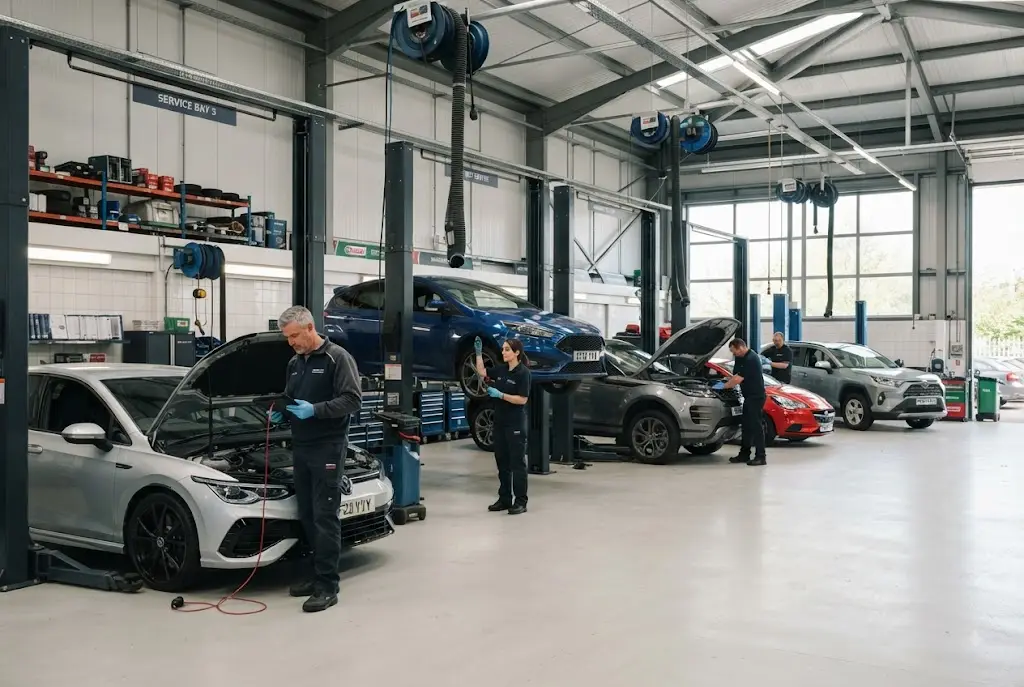
Automotive service companies play an important role in keeping cars, vans and other road vehicles safe, reliable and properly maintained across the UK. The sector includes independent garages, authorised workshops, national service networks, specialist repairers and businesses focused on particular areas such as tyres, diagnostics or accident repair.
For drivers, understanding the differences between these businesses can make it easier to choose the right workshop. Price is important, but so are technician expertise, equipment, service standards, customer support, warranty arrangements and the type of work a garage is equipped to handle.
As vehicle technology becomes more advanced, the role of automotive service companies is changing too. Hybrid and electric vehicles require different knowledge and equipment, while digital booking systems and workshop networks are making vehicle maintenance more accessible.
What Are Automotive Service Companies?
Automotive service companies are businesses that provide maintenance, inspection, repair, diagnostics or other technical services for vehicles. Some operate from a single local workshop, while others form part of large regional or national networks.
The services offered can range from routine oil and filter changes to complex diagnostics, brake repairs, suspension work, tyre fitting, air conditioning, MOT testing and electronic system troubleshooting. Some businesses also specialise in accident repairs, commercial vehicles or particular vehicle technologies.
The term therefore covers a much broader group than traditional car garages. A customer may be dealing with a small family-run workshop, a manufacturer-authorised dealer, a national garage chain or an independent garage that belongs to a recognised service network.
Types of Automotive Service Companies
Not every workshop operates in the same way. Understanding the main categories can help drivers decide which type is most appropriate for a particular job.
Independent Garages
Independent garages are locally operated businesses that are not directly owned by a vehicle manufacturer or a large national automotive chain. Many serve a specific community and rely heavily on repeat customers, local recommendations and their reputation.
An independent garage can be an attractive option for routine servicing and repairs because it may offer a more personal relationship with customers. The same technician or workshop team may work on a vehicle repeatedly, allowing them to become familiar with its history.
Quality can vary between businesses, however. Drivers should check qualifications, reviews, warranties, equipment and any relevant industry accreditation before booking significant work.
Authorised Workshops
Authorised workshops generally have a formal relationship with a vehicle manufacturer or another automotive brand. Main dealers are the most familiar example. They typically work with manufacturer-specific diagnostic systems, technical information and servicing procedures.
This can be particularly useful for newer vehicles, complex faults or work where manufacturer-specific knowledge is important. The trade-off may be higher labour or servicing costs compared with some independent alternatives.
National Service Networks
National service networks connect multiple workshops under a shared brand, programme or operating structure. The model can provide motorists with wider geographical coverage and centralised booking or customer support.
Some networks consist of company-owned sites, while others include independently owned garages that operate under the network’s standards or commercial framework. The distinction matters because the individual workshop may remain locally managed even when customers recognise a national brand.
This type of structure is also why drivers should assess the specific workshop as well as the wider organisation. A network can provide useful standards and support, but the actual work still takes place at an individual location.
How Service Standards Differ
Service standards are an important consideration when choosing between automotive service companies. A professional-looking workshop does not by itself demonstrate technical competence, so motorists should look for evidence of appropriate training, recognised codes, equipment and transparent working practices.
For example, the Trading Standards Approved Code Scheme lists Trust My Garage as a consumer code specifically for independent garages. The scheme states that its members are audited for standards in service, working practices and training.
Other recognised networks operate under their own standards and consumer codes. Bosch Car Service, for example, is listed under the Trading Standards Approved Code Scheme, with its UK network consisting of hundreds of members.
These schemes do not mean every business is identical. Instead, accreditation can give consumers another useful indicator when comparing workshops.
Why Customer Support Matters
Customer support can be just as important as the technical work itself. Vehicle repairs can be stressful, especially when the fault affects daily commuting, family travel or work.
Good automotive service companies should make it reasonably clear what has been identified, what needs repairing and what the customer can expect to pay. Written estimates, clear explanations and approval before additional work can reduce misunderstandings.
Drivers should also ask about guarantees and warranties. If a repair is covered for a specified period or mileage, understanding the conditions before authorising the work can prevent problems later.
For more complex disputes, independent automotive bodies can also play a role. The Motor Ombudsman is a CTSI-approved scheme covering businesses across the automotive sector and provides codes designed to improve standards and consumer protection.
Automotive Service Companies and Workshop Networks
Workshop networks have become an important part of the UK’s automotive aftermarket. They allow local garages to benefit from broader brand recognition, technical resources, parts relationships, training or customer-facing systems while continuing to operate locally.
Approved Garages is one example of this model. Its network is made up of independently owned local businesses that join the network to extend their marketing reach. Customers can search for participating garages, view profiles, check feedback and obtain estimated prices for common maintenance tasks.
This model sits between a completely independent garage and a fully company-owned national chain. It can give drivers the local relationship of an independent business while adding some network-level resources and visibility.
Drivers who want to understand the wider structure of the sector can also compare these networks with garage chains in the UK, where multiple branches operate under a recognised national or regional brand.
What Services Do Automotive Service Companies Provide?
The exact range varies considerably between businesses, but common automotive services include:
- Routine vehicle servicing
- MOT testing
- Brake inspections and repairs
- Tyre fitting and replacement
- Wheel alignment and balancing
- Battery testing and replacement
- Engine diagnostics
- Electrical fault diagnosis
- Suspension repairs
- Clutch and transmission work
- Exhaust system repairs
- Air conditioning servicing
- Accident and body repairs
Some workshops specialise in one or two of these areas, while larger businesses may provide a much wider package. Before making a booking, drivers should confirm that the chosen workshop actually offers the required service.
Choosing an Automotive Service Company
There is no single best workshop for every driver or every vehicle. The right choice depends on the job, vehicle age, technical complexity, location and budget.
Check the Workshop’s Expertise
Start with the vehicle and the problem. A simple tyre replacement may not require specialist expertise, while an electronic fault, hybrid system issue or electric vehicle problem can require appropriately trained technicians and equipment.
Drivers with electrified vehicles should pay particular attention to workshop capabilities. Understanding hybrid servicing and EV servicing can help owners recognise why specialist knowledge may matter when selecting a workshop.
Compare the Complete Quote
Do not compare businesses using the headline price alone. Ask whether labour, parts, diagnostic charges, VAT and other relevant costs are included.
A cheaper initial quote is not necessarily better value if important work is excluded. Equally, a higher quote does not automatically mean better workmanship. The goal is to understand exactly what you are paying for.
Look at Recent Feedback
Customer reviews can provide useful context, particularly when comparing local workshops. Look for patterns rather than focusing on a single positive or negative comment.
Pay attention to comments about communication, punctuality, repair quality, unexpected charges and how complaints were handled.
Check Accreditation and Codes
Accreditation is another useful factor. Citizens Advice recommends considering an approved garage and points consumers towards businesses accredited by The Motor Ombudsman for service and repair work.
Accreditation should still be considered alongside other evidence, including the workshop’s actual experience, equipment and reputation.
Questions to Ask Before Booking
A few questions can make the process much clearer:
- Is the workshop experienced with my vehicle make and model?
- Does it have the diagnostic equipment required for the job?
- What exactly is included in the quoted price?
- Will I be contacted before additional work is carried out?
- What parts will be fitted?
- Is the work covered by a warranty or guarantee?
- Will I receive a written report or invoice?
- Does the business belong to a recognised trade association or service network?
These questions are particularly valuable for expensive repairs. A clear conversation before work begins can help both the customer and workshop understand what has been agreed.
How Vehicle Technology Is Changing the Sector
Automotive service companies are facing a major shift as modern vehicles become more software-driven and electrified. Technicians increasingly need to understand advanced driver assistance systems, electronic control units, connected features, high-voltage systems and sophisticated diagnostic tools.
This does not mean traditional mechanical knowledge is becoming irrelevant. Brakes, suspension, tyres, steering and other physical components remain essential. Instead, modern workshops increasingly need a combination of mechanical, electrical and digital skills.
The transition is especially important for hybrid and electric vehicles. Battery systems, charging components and high-voltage safety require appropriate procedures and training. As ownership grows, workshop networks will need to adapt their equipment and technician skills accordingly.
Business Insights: What Makes a Strong Service Company?
From a business perspective, successful automotive service companies need more than technical capability. They also need efficient scheduling, reliable parts supply, effective customer communication and strong quality control.
Customer trust is particularly important because vehicle repairs can involve significant spending and customers cannot always assess technical work themselves. Clear estimates, honest explanations and dependable aftercare can therefore become important competitive advantages.
Technology is also influencing operations. Online bookings, digital service records, automated reminders and customer communication tools can improve convenience while helping workshops manage their workload.
Final Thoughts on Automotive Service Companies
Automotive service companies cover a diverse part of the UK motoring industry, from independent garages and authorised workshops to national networks and specialist repair businesses. Each model has potential advantages, but the right choice depends on the vehicle and the work required.
Drivers can make better decisions by comparing technical expertise, service standards, customer support, accreditation, pricing and warranty arrangements rather than choosing solely on brand recognition or headline cost.
As vehicles become more connected and electrified, the strongest service providers will need to combine traditional mechanical skills with modern diagnostic expertise. For motorists, that makes understanding the different types of automotive service companies increasingly valuable when planning long-term vehicle care.
