Garage chains have become a familiar part of the UK automotive landscape, giving drivers access to servicing, MOT testing, tyre fitting, repairs and other vehicle care services through established networks. For motorists who want convenient booking, multiple locations and a recognisable brand, a garage chain can be an appealing option. However, not every chain specialises in the same type of work, and the experience can vary between individual branches.
Understanding how garage chains operate makes it easier to compare them with independent garages, authorised workshops and specialist service providers. It also helps drivers choose the right business for routine maintenance, tyres, mechanical repairs or accident-related work.
What Are Garage Chains?
Garage chains are groups of automotive businesses operating under a shared brand, ownership structure, franchise model or wider service network. Instead of relying on a single local workshop, these organisations operate across multiple locations and typically offer a standardised range of vehicle services.
The services available depend on the company. Some garage chains concentrate heavily on tyres and fast-fit maintenance, while others provide broader servicing, MOT testing, diagnostics, brakes, exhaust repairs, batteries and other mechanical work. Accident repair networks can also operate under a chain or franchise structure, although their services are more specialised.
The main attraction is convenience. A driver who moves between towns or cities may find it easier to use a familiar network rather than locate a new independent workshop every time their vehicle needs attention.
How Garage Chains Work
A large automotive network usually combines central systems with local workshops. Online booking, pricing structures, customer records, training programmes and brand standards may be managed at a national or regional level, while technicians at individual sites carry out the physical work.
This structure can create a more consistent customer journey. A driver may be able to check prices online, choose a nearby centre, arrange a service and receive documentation without contacting several different businesses.
However, standardisation does not necessarily mean every branch will provide an identical experience. Local management, staffing, workload, technician experience and available equipment can all influence how a visit feels. That is why checking the specific location, rather than relying only on the reputation of the wider brand, remains sensible.
Major Garage Chains and Service Networks in the UK
The UK has a broad automotive aftermarket, with national brands, regional groups, franchise networks and independent workshops competing for motorists’ business. Several well-known names illustrate how different types of garage chains operate.
National Tyres & Autocare
National Tyres & Autocare is closely associated with tyre fitting and vehicle maintenance. It operates within the wider Halfords automotive structure, and current Halfords tyre promotions continue to list both Halfords Autocentres and National Tyres & Autocare as fitting locations.
For drivers, this relationship demonstrates how automotive businesses can share infrastructure, purchasing arrangements and customer-facing services while retaining established brands. When considering a branch, motorists should still check exactly which services are offered at that location.
Kwik Fit
Kwik Fit is one of the UK’s most recognisable fast-fit automotive service chains. Its current network includes more than 600 centres and covers services such as tyres, brakes, exhausts, batteries, MOT testing, servicing and air conditioning. The company also offers mobile tyre fitting in addition to its physical centres.
Its scale makes accessibility one of its major advantages. A large network can be particularly useful for drivers who travel frequently or need a service close to home or work.
ATS Euromaster
ATS Euromaster provides an important example of how quickly the automotive service market can change. The company has been winding down its UK operations, with its official UK site stating that its service centres are now closed. It has also redirected customers towards partners and provided information about existing warranties and Masterservice claims.
This development is a useful reminder that a familiar garage chain is not necessarily a permanent fixture. Drivers should check the current status of a local branch before relying on older listings, reviews or recommendations.
Halfords
Halfords is another major name in the UK’s automotive services market. Through Halfords Autocentres and its relationship with National Tyres & Autocare, the business provides motorists with access to tyre fitting and broader vehicle maintenance services.
Its wider retail presence also means that the brand sits across several parts of the motoring market. Drivers comparing services should therefore look specifically at the automotive offering available at their chosen location rather than assuming every Halfords site provides the same workshop facilities.
Protyre
Protyre is a national automotive service network with a strong connection to tyres, servicing, MOT testing and related vehicle maintenance. Its network model allows motorists to access services through multiple locations while retaining the convenience associated with an established automotive brand.
As with other garage chains, the most useful comparison is not simply the company name. Drivers should consider the exact service required, the equipment available, quoted price, warranty terms and reputation of the individual centre.
Fix Auto
Fix Auto operates differently from many traditional fast-fit garage chains because it focuses heavily on accident and collision repair. Its UK network consists of franchisee-owned and managed body shops, giving independent operators access to a recognised network and shared standards.
Fix Auto UK states that its locations are certified to British Standard BS 10125 and that the network works with major insurance providers. This makes it a useful example of how service networks can combine local ownership with national processes and standards.
Why Drivers Choose Garage Chains
There are several reasons motorists use garage chains rather than relying exclusively on a local independent workshop.
Convenience and Accessibility
A national or regional network may have multiple locations, making it easier to find a centre near home, work or a regular travel route. Online booking can also reduce the time needed to arrange routine work.
Recognisable Service Processes
Garage chains often use central systems for bookings, customer communication and service packages. This can make the process more predictable for motorists who prefer structured services rather than negotiating every detail with a workshop.
Range of Services
Many large networks cover several common maintenance requirements. A single visit may involve an MOT, service, tyre inspection, brake check or battery assessment, depending on the centre and vehicle.
National Brand Recognition
A recognisable name can give customers a starting point when they do not have a trusted local mechanic. However, brand recognition should be treated as one factor rather than proof that a particular branch is the best option.
Garage Chains vs Independent Garages
Choosing between garage chains and independent garages often comes down to personal priorities. Independent garages may offer a more personalised relationship, local reputation and flexibility. Many have built their customer base through repeat business and word-of-mouth recommendations.
Garage chains, on the other hand, can provide broader networks, centralised booking systems, established service packages and more consistent brand processes.
Neither model is automatically better for every job. A simple tyre replacement may be suitable for a large fast-fit network, while a complicated diagnostic problem could require a specialist with particular experience of the vehicle. For motorists researching wider automotive service companies, understanding the difference between these business models is an important part of making an informed choice.
What Should You Check Before Booking?
Before booking a garage chain, start by identifying exactly what your vehicle needs. A routine service, MOT, tyre replacement, wheel alignment and major mechanical repair may require different expertise and equipment.
Next, check the specific branch rather than relying solely on the national brand. Look at recent customer feedback, available services, appointment times and whether the centre has the equipment required for your vehicle.
It is also sensible to ask what is included in the quoted price. A low headline price may cover only part of the required work, while additional components or repairs could increase the final bill.
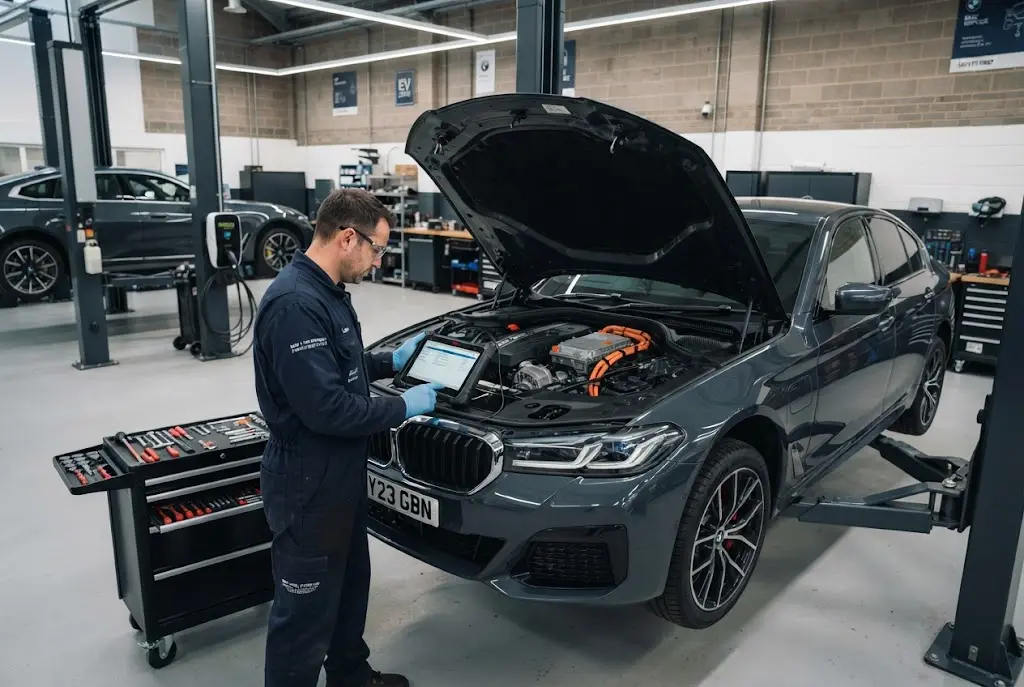
For drivers considering future-focused vehicle maintenance, specialist knowledge is becoming increasingly important. Hybrid and electric vehicles, for example, can require different diagnostic equipment, training and safety procedures. Understanding hybrid servicing and EV servicing can help owners choose a workshop with appropriate capabilities.
Questions to Ask a Garage Chain
A few straightforward questions can prevent confusion before work begins:
- What exactly is included in the quoted service?
- Will the workshop contact me before carrying out additional work?
- What parts will be used?
- What warranty or guarantee applies to the work?
- Does this location have the equipment needed for my vehicle?
- Will I receive a written report or service record?
- Is the quoted price inclusive of labour and applicable charges?
These questions are particularly useful when comparing several automotive businesses. They shift the focus away from headline pricing and towards the overall value and quality of the service.
Are Garage Chains Right for Every Driver?
Garage chains can be a practical choice for motorists who value accessibility, established processes and convenient booking. They are particularly useful for routine maintenance and services that are widely available across a network.
However, drivers should not assume that a national brand automatically makes a workshop suitable for every problem. Complex diagnostics, specialist modifications, performance vehicles and certain newer powertrains may require a technician with specific expertise.
The best approach is to match the workshop to the job. Consider the vehicle, the required repair, technician expertise, equipment, price, warranty and local reputation before making a decision.
The Future of Garage Chains
The UK’s automotive aftermarket is changing as vehicle technology develops. Hybrid and electric vehicles are increasing the need for specialist training, high-voltage safety procedures and advanced diagnostics. At the same time, digital booking, mobile servicing and centralised customer systems are changing how motorists interact with automotive businesses.
Garage chains will therefore need to balance convenience with technical capability. Networks that invest in technician training, appropriate equipment and strong customer support are likely to be better positioned as vehicle technology evolves.
The changing structure of the market also shows why drivers should keep their options open. A familiar chain may be convenient today, while an independent specialist or authorised workshop may be a better choice for a particular vehicle tomorrow.
Final Thoughts on Garage Chains
Garage chains play an important role in UK vehicle maintenance, offering motorists accessible locations and a wide range of services. From tyre-focused networks to full-service autocentres and specialist accident repair groups, the sector includes several different business models.
The key is to look beyond the brand name. Check the individual workshop, confirm what is included in the price, consider technician expertise and make sure the centre is equipped for the work your vehicle requires. With that approach, garage chains can provide a convenient and practical part of a wider vehicle maintenance strategy.