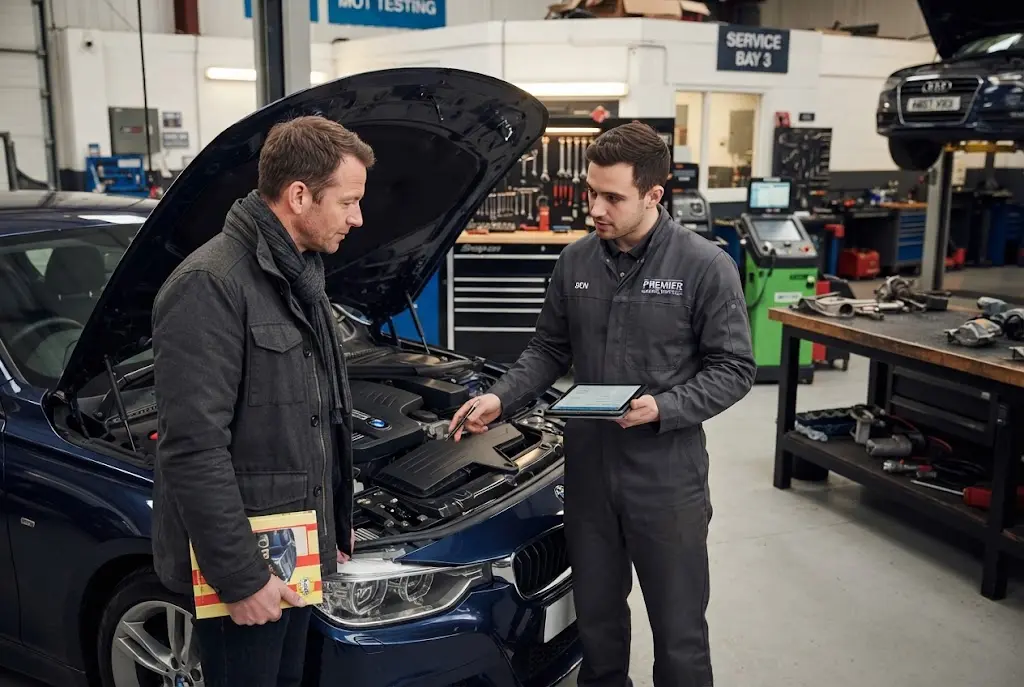
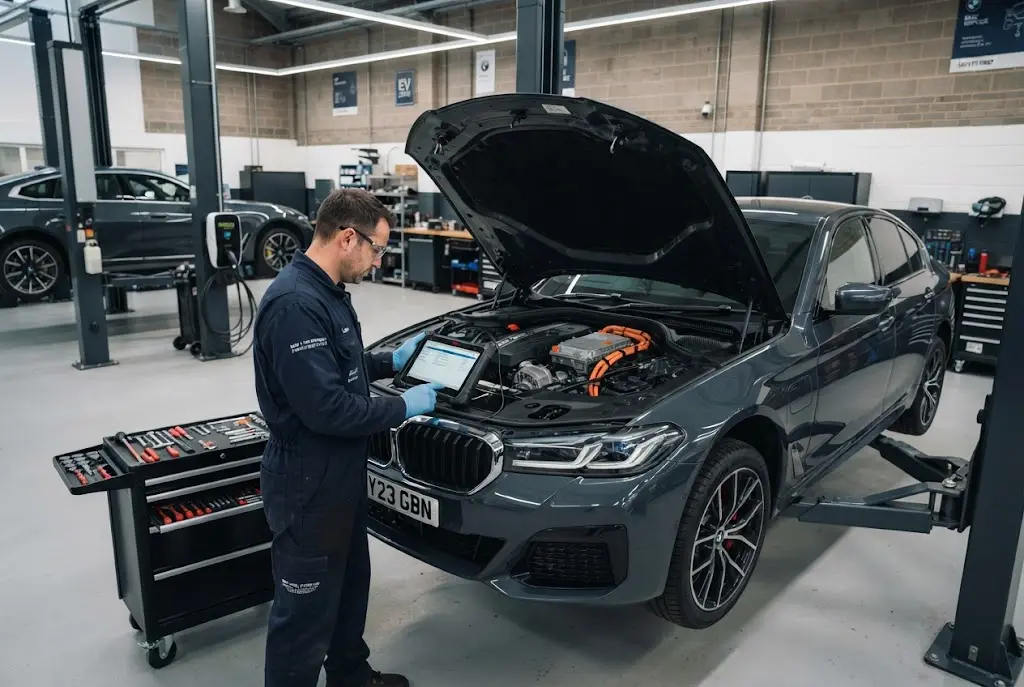
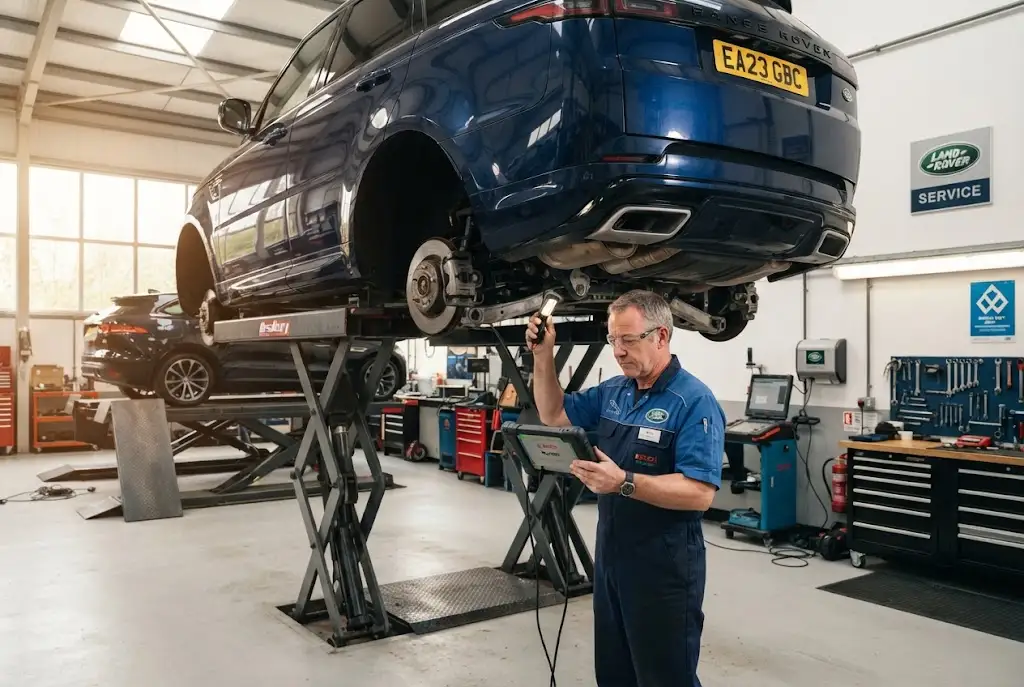
EV servicing is becoming an increasingly important part of vehicle ownership as more drivers choose fully electric cars. Unlike petrol and diesel vehicles, electric cars do not use conventional engines, exhaust systems or many of the mechanical components associated with combustion-powered vehicles. However, they still require regular maintenance, safety inspections, software diagnostics, tyre checks, brake inspections and specialist attention to high-voltage electrical systems.
Understanding electric vehicle maintenance can help owners choose the right workshop, recognise which components need attention and plan long-term vehicle care. It is also important to understand that an electric car having fewer moving mechanical parts does not mean it is maintenance-free.
What Is EV Servicing?
EV servicing is the inspection and maintenance of a battery electric vehicle and its electrical, mechanical and safety systems. The exact requirements vary according to the manufacturer, model, mileage, age and vehicle design.
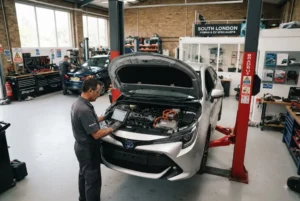
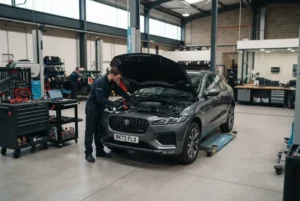
A typical service may include checks of tyres, brakes, steering, suspension, lights, fluids, charging equipment and electronic systems. It can also involve diagnostic checks of the battery and other high-voltage components where the workshop has the appropriate expertise and equipment.
The service schedule should always be based on the manufacturer’s recommendations. Different electric vehicles can have different inspection intervals and maintenance requirements, so there is no single servicing timetable that applies to every EV.
Why EV Servicing Matters
Electric vehicles still depend on critical systems that must remain in good working condition. Tyres affect grip and efficiency, brakes are essential for road safety, suspension components influence handling, and electrical systems control the vehicle’s propulsion and charging functions.
Routine maintenance can also identify developing problems before they become more serious. GOV.UK advises motorists that they are responsible for ensuring their vehicles remain roadworthy and that a current MOT certificate does not necessarily mean a vehicle is safe to drive. Its guidance also recommends following the vehicle handbook for servicing and maintenance requirements.
For EV owners, regular maintenance therefore remains an important part of safe and dependable electric vehicle ownership.
What Does EV Servicing Include?
The precise checklist depends on the vehicle, but several areas commonly form part of electric car maintenance.
Battery and High-Voltage System Checks
The traction battery is one of the most important components in an electric vehicle. It stores the electrical energy used to power the motor and is integrated with sophisticated battery-management and control systems.
Battery servicing does not automatically mean removing or replacing the battery pack. Depending on the vehicle and service procedure, a technician may use diagnostic equipment to identify fault codes, assess system condition and check for warning indicators.
High-voltage work is a specialist activity. The Health and Safety Executive states that electric and hybrid vehicles can contain significantly higher voltages than conventional 12- or 24-volt vehicle systems, with some systems reaching up to 650 volts DC. It also says that additional skills, training and specialist equipment may be necessary for safe work.
Brake Inspection
Electric vehicles commonly use regenerative braking to recover energy during deceleration. This can reduce the use of conventional friction brakes in some driving conditions, but it does not remove the need for brake inspections.
Brake discs, pads, callipers and associated components can still deteriorate. Drivers should therefore follow the manufacturer’s maintenance recommendations and have unusual noises, reduced braking performance or warning messages investigated.
Tyres and Wheel Condition
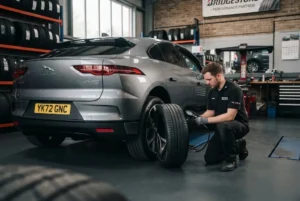
Tyres are particularly important on EVs because electric cars can deliver immediate torque and may have substantial battery weight. Correct tyre pressure, suitable tyre specification and adequate tread are important for safety and vehicle performance.
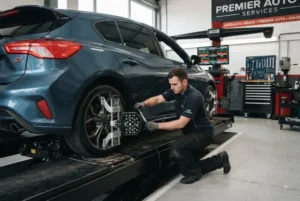
Uneven tyre wear can also indicate problems with suspension or alignment. Drivers who notice the vehicle pulling to one side or unusual wear patterns can learn more from our guide to wheel alignment before booking an inspection.
Suspension and Steering
Suspension and steering components remain essential regardless of the vehicle’s powertrain. Servicing may involve checking components for wear, damage, looseness or other issues that could affect handling.
These systems should not be overlooked simply because an EV has fewer engine-related maintenance requirements.
Charging System Checks
Charging is central to EV ownership, so the vehicle’s charging hardware and related electrical systems may require inspection when appropriate. Problems can involve the vehicle’s charging port, onboard charging equipment, cables or communication between the vehicle and charging equipment.
If an EV repeatedly fails to charge, charges unusually slowly or displays a charging-related warning, owners should consult the vehicle manufacturer or an appropriately equipped technician rather than repeatedly attempting to use faulty equipment.
Software and Diagnostic Checks
Modern electric vehicles rely heavily on software and electronic control systems. Diagnostic equipment can help technicians identify faults that cannot be detected through a simple visual inspection.
Some vehicles may also receive software updates through the manufacturer or remotely. The precise process differs between manufacturers, so owners should follow the instructions supplied for their vehicle.
Do Electric Cars Need Less Maintenance?
Electric vehicles generally have fewer conventional drivetrain components than petrol or diesel vehicles. There is no traditional internal combustion engine requiring engine oil changes, and many EVs do not have exhaust systems or conventional multi-speed transmissions.
That can reduce the number of routine maintenance tasks associated with combustion engines. However, it does not mean an EV can simply be ignored between inspections.
Tyres, brakes, steering, suspension, lights, windscreen systems and other road-going components still require attention. The battery and high-voltage electrical system also introduce areas where specialist expertise may be necessary.
The best way to think about EV maintenance is not that it eliminates servicing, but that it changes the type of servicing required.
Choosing the Right EV Mechanics
Workshop capability is particularly important when servicing an electric vehicle. The Health and Safety Executive explains that people involved in electric and hybrid vehicle repair and maintenance are likely to need a greater level of competence than those carrying out lower-risk activities such as sales or valeting.
HSE guidance identifies different categories of work, including maintenance and repair that excludes high-voltage electrical systems and work directly involving high-voltage electrical systems. The level of competence required depends on the work being performed.
When choosing EV mechanics, ask whether the workshop regularly works with electric vehicles and whether technicians have the appropriate training and equipment for the job.
It is also useful to ask whether the workshop can access suitable diagnostic information, follow manufacturer procedures and safely isolate high-voltage systems when required.
EV Servicing at Independent Garages
Electric vehicle owners do not necessarily have to use a manufacturer’s main dealer for every maintenance task. Independent workshops can also provide EV services, provided they have the appropriate knowledge, equipment and competence.
The important distinction is between routine maintenance and specialist high-voltage work. A capable independent garage may be well equipped for tyres, brakes, suspension and general inspections, while a complex battery or high-voltage fault may require a workshop with more specialised facilities.
Our guide to automotive service companies explains how independent garages, authorised workshops and service networks differ, which can help EV owners compare their options.
EV Servicing at Garage Chains
Large garage networks are also adapting to the growing presence of electric vehicles. Some national service businesses offer EV-specific maintenance or have introduced training and equipment designed to support electric cars.
However, drivers should check the capabilities of the individual branch rather than assuming every location within a network offers identical EV services.
Before booking, confirm that the centre works on the specific make and model, has appropriate diagnostic equipment and can carry out the required work safely.
This is particularly important when a service involves high-voltage components rather than conventional mechanical maintenance. Our guide to garage chains in the UK provides additional context on how national automotive service networks operate.
Battery Servicing and Battery Health
Battery health is one of the biggest considerations for many prospective and current EV owners. The traction battery is a major component of the vehicle, but battery health should be assessed using appropriate vehicle-specific diagnostic procedures rather than assumptions based solely on age or mileage.
Owners should pay attention to battery-related warning messages, unusual charging behaviour or significant changes in vehicle performance. If a fault is suspected, professional assessment can determine whether the problem relates to the battery itself, charging equipment, software or another component.
Battery safety is also important. GOV.UK guidance for electric and hybrid vehicle inspection notes that propulsion batteries carry high voltage and require additional care when being tested. It also warns that damaged high-voltage components and cabling can present a serious electric shock risk.
EV Servicing and Charging Infrastructure
Charging infrastructure is closely connected to electric vehicle ownership. Home chargers, workplace charging points and public charging stations all form part of the wider EV ecosystem.
However, a vehicle service and a charging-point installation are different areas of work. If a home charging installation requires electrical work, it should be handled by a suitably qualified installer following the applicable requirements.
Vehicle owners should also follow manufacturer instructions for charging cables and equipment. If a cable, connector or charging port appears damaged, it should be inspected rather than used without further consideration.
How Often Should an EV Be Serviced?
There is no universal EV service interval. Manufacturers establish their own schedules based on vehicle design, components, software and expected usage.
Some electric vehicles may have longer service intervals than conventional cars, while others may recommend periodic inspections for specific components. The owner’s handbook and manufacturer service information should therefore be treated as the primary reference.
Drivers should also arrange an inspection if the vehicle develops a fault, displays a warning message, suffers damage or behaves differently from normal.
EV Maintenance Between Services
Owners can contribute to vehicle care between professional services by carrying out basic checks and paying attention to changes in vehicle behaviour.
- Check tyre pressures according to the manufacturer’s recommendations.
- Inspect tyres for visible damage and unusual wear.
- Pay attention to brake performance and warning messages.
- Keep charging connectors and ports in appropriate condition.
- Monitor dashboard warnings and diagnostic messages.
- Follow the manufacturer’s recommended service schedule.
- Report unusual charging or battery behaviour promptly.
GOV.UK recommends regular checks of important roadworthiness items such as tyres, brakes, lights and other vehicle components. The same principle applies to electric cars even though their propulsion systems differ from conventional vehicles.
EV Servicing and Long-Term Ownership
Proper maintenance can support a more predictable ownership experience. Keeping service records can help owners understand the vehicle’s maintenance history and demonstrate that recommended care has been carried out.
It can also be useful when selling the vehicle. A clear maintenance history gives prospective buyers more information about how the car has been looked after.
As EV technology develops, owners may increasingly encounter vehicles with more advanced battery systems, driver assistance technology, software features and charging capabilities. This makes choosing a workshop with appropriate technical knowledge increasingly important.
The Future of Electric Vehicle Maintenance
The growth of electric vehicles is changing the UK’s automotive repair sector. Workshops need to adapt to high-voltage systems, advanced diagnostics, battery technology and increasingly software-defined vehicles.
The Health and Safety Executive’s current motor vehicle repair guidance highlights electric and hybrid vehicles as an area where repair businesses need to understand specific risks and controls. This means workshop training and technical competence will remain important as EV ownership expands.
For drivers, the transition should make workshop selection more deliberate. Instead of simply asking whether a garage services cars, it is increasingly useful to ask whether it has the skills, equipment and procedures required for the specific electric vehicle and repair involved.
Final Thoughts on EV Servicing
EV servicing is different from traditional car servicing, but electric vehicles still need regular professional maintenance. Tyres, brakes, steering, suspension, charging systems and electronic components all contribute to safe and dependable operation.
The biggest difference is the importance of high-voltage expertise. Work involving traction batteries and high-voltage electrical systems should be carried out by suitably trained and equipped professionals. Choosing the right workshop therefore matters just as much as following the manufacturer’s service schedule.
As electric vehicle ownership continues to develop, understanding battery servicing, EV mechanics, charging infrastructure and routine maintenance will help drivers make more informed decisions. A well-maintained EV can then remain a practical part of modern vehicle ownership while workshops continue adapting to the changing automotive landscape.